 How-to
How to Create a Personalized Event Design: 7-Step Guide
Table of Contents
- Start With a Clear Brief for Your Personalized Event Design
- Run a Structured Event Design Process From Concept to Installation
- Personalized Event Ideas That Reflect the Guest of Honor
- Translate the Concept Into Custom Event Decor
- Choose Event Design Software That Supports Real Collaboration
- Budget Tiers and the Personalization Trade-Offs Behind Them
- Measure Whether the Design Actually Worked
- Frequently Asked Questions
Last Updated: October 19, 2026
Start With a Clear Brief for Your Personalized Event Design
A personalized event design starts with a written brief, not a mood board. The brief is the single document that keeps every decision tied to the guest of honor rather than to whatever looks good on social media this month.
Here is the definition worth remembering: personalized event design is the practice of shaping a celebration's theme, palette, layout, and details around one specific person or group, rather than applying a ready-made template. It is design with a name attached.
The Five Questions That Shape Every Design Decision
Answer these before you sketch anything. Write the answers down.
- Who is this actually for? The guest of honor, not the host's Pinterest board.
- What should guests feel when they walk in? Joy, calm, awe, nostalgia. Pick two.
- What is the one detail that must appear? A grandmother's china pattern. A favorite song lyric. A hometown.
- What is fixed and what is flexible? Venue, date, and guest count are usually locked. Everything else can move.
- What does success look like? A number, a moment, or a comment you want to overhear.
Those five answers become your design brief. Everything downstream flows from them.
Run a Structured Event Design Process From Concept to Installation
A structured event design process moves through five stages: brief, concept, palette and materials, layout, and installation.
Stage 1, Brief. Lock the five questions above.
Stage 2, Concept. Write one paragraph describing the room from the guest's point of view.
Stage 3, Palette and materials. Choose three colors and two textures. More than that reads as noise.
Stage 4, Layout. Map the floor plan around sightlines, traffic flow, and focal points.
Stage 5, Installation and strike. Schedule setup hours, name who handles each zone, and plan how custom pieces leave the venue.
Where Personalization Usually Goes Wrong
The most common mistake is personalizing the wrong thing. Hosts often customize what guests will photograph and skip what guests will actually experience.
- Custom photo backdrops get all the attention; seating comfort gets none.
- Signage carries a monogram while the room has no focal point.
- The palette matches a favorite color but the lighting flattens it.
A second trap: too many ideas competing. One strong, specific detail beats ten generic ones. Guests remember the moment, not the inventory.
Personalized Event Ideas That Reflect the Guest of Honor
Personalized event ideas work when they translate a real detail about the guest into something guests can see, touch, or hear. The detail has to be true, not decorative.
Most competitors stop at "mine their hobbies." The useful part is the translation step: how a fact about a person becomes a design decision.
| What you know | What it becomes | Where it shows up |
|---|---|---|
| Grew up on a lake | Water-toned palette, rippled textures | Linens, lighting gobos, bar face |
| Plays upright bass | Curved lines, warm wood tones | Centerpiece bases, signage frames |
| Family recipe for lemon cake | A signature dessert moment | Dessert table focal point, menu card |
| Grandmother's china pattern | A motif, not the actual china | Place cards, cake design, invitation liner |
Start by mining the guest of honor's life for specifics:
- Hobbies and passions. Equipment, colors, and textures from the activity itself.
- Places that matter. A hometown, a family cabin, a favorite restaurant.
- People and stories. A tribute table, a memory wall, a signature drink named for a grandparent.
Then edit ruthlessly. Pick two or three ideas and execute them fully.
Tailor the Personalization to the Event Type
The same translation method produces different results depending on the occasion. A few patterns that hold up:
- Weddings. Personalize the ceremony entrance and the couple's table first; those are the two moments guests watch longest. A shared hobby can become a guest-book prompt or a late-night snack station rather than a prop.
- Corporate events and conferences. Personalization here means the attendee, not the company logo. Named welcome signage, role-based wayfinding, and a session track built around a known interest outperform branded swag. Keep brand elements to one repeated mark.
- Fundraisers and galas. Tie the design to the mission. A tribute wall of people served, a program cover featuring a real story, and a paddle-raise moment designed around a specific program cost do more than a themed color scheme.
Design for Accessibility and Different Guest Needs
Personalization that excludes guests is not personalization. Build these into the concept stage, not the week before:
- Sightlines and seating. Reserve front-row sightlines for guests with mobility devices and keep aisles at least 36 inches wide where the venue allows.
- Sensory comfort. Offer a quiet room or a low-stimulation corner, and keep flashing or strobing lighting out of the main program.
- Dietary and cultural needs. Menu cards and signage should name allergens and clearly mark alcohol-free and culturally appropriate options.
A simple test: walk the guest journey as someone who uses a wheelchair, someone who is hard of hearing, and someone who does not drink. If any of them hit a dead end, the design is not finished.
Translate the Concept Into Custom Event Decor
Custom event decor is where a concept becomes physical.
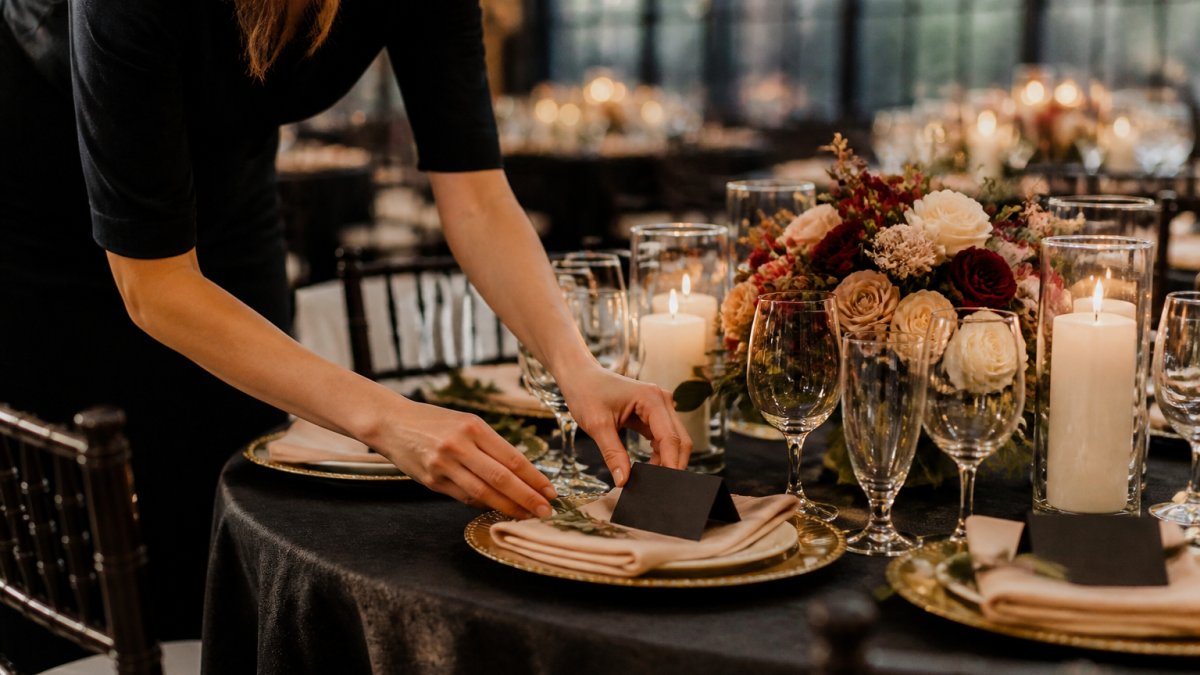
Work in layers, from largest to smallest:
- Focal points. One hero element per room. A floral arch, a custom bar face, a suspended installation.
- Tablescapes. Linens, chargers, glassware, and centerpieces that echo the palette.
- Graphic panels and signage. Welcome signs, seating charts, and menu cards in a consistent typeface.
Cohesion comes from repetition. Repeat one shape, one texture, or one color across every layer. That is what makes a room feel designed rather than assembled.
Choose Event Design Software That Supports Real Collaboration
Event design software should do one job well: keep the brief, the palette, the floor plan, and the vendor list in one place everyone can see. Tools that only produce pretty renderings tend to create more confusion than clarity.
What to look for:
- Shared mood boards the host and planner can both edit
- Floor plan tools with real venue dimensions
- Vendor and task tracking tied to the design stages
Event Industry Council resources on event design standards offer useful framing for how design decisions connect to the broader event program.
Run the Brief-to-Design Workflow in One Place
The gap most tool roundups miss is the workflow itself. Software only helps if it carries a decision from the brief through to install. A practical sequence:
- Capture the brief. Store the five questions and their answers as a locked document. Every later decision links back to it.
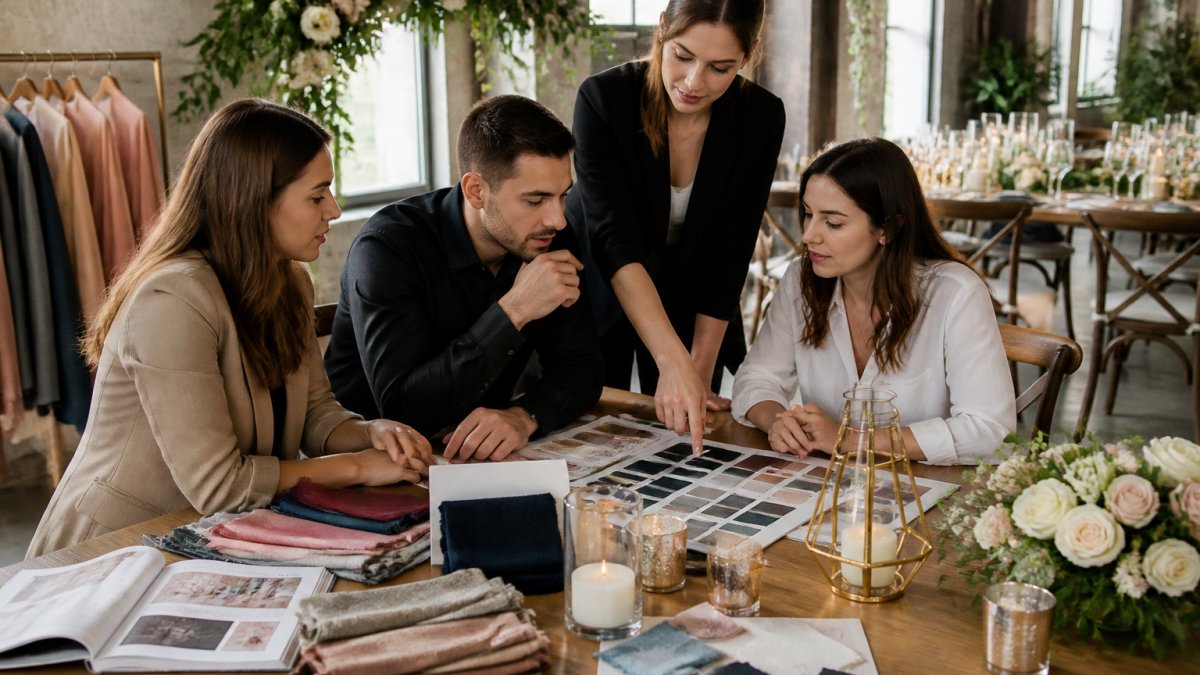
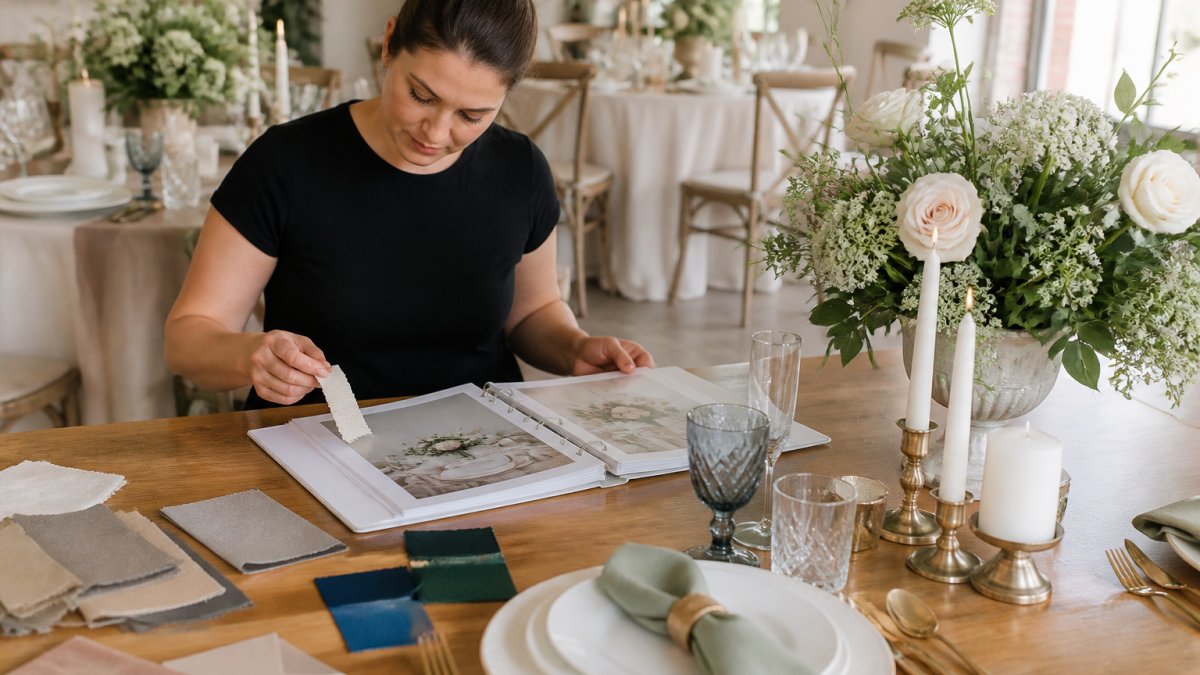
- Attach evidence. Drop in reference photos, fabric swatches, and venue photos next to the relevant brief answer, not in a separate folder.
- Build the palette and material board. Limit the board to three colors and two textures so the constraint is visible to everyone.
- Draw the floor plan to scale. Import the venue's dimensioned plan or measure it yourself; a plan without real dimensions is a sketch.
- Pin decisions to zones. Tag each focal point, tablescape, and signage piece to a floor-plan zone so install crews know where it goes.
- Run a versioned approval. Send the host one link with the current concept, palette, and plan, and record approval against that version.
- Export the install packet. One PDF with the plan, zone assignments, setup order, and strike plan.
A Reusable Design Brief and Decision Checklist
Whether you use software or a shared document, the brief should contain the same fields every time. Copy this checklist into your tool of choice:
- Guest of honor and primary audience
- Two feelings guests should have on arrival
- The one detail that must appear
Software is a coordination tool, not a creative one. The concept still comes from the brief. But when a host, a florist, and a lighting tech are all looking at the same layout and the same approved version, the install day runs shorter and the surprises shrink.
Budget Tiers and the Personalization Trade-Offs Behind Them
Budget tiers change what personalization is possible, not whether it exists. The trade-off is always the same: spend on the details guests will notice most, and go simple everywhere else.
| Tier | Best For | Where to Spend | Where to Save |
|---|---|---|---|
| Essential | Intimate gatherings, tight timelines | One hero focal point, custom signage | Reusable linens, in-house lighting |
| Elevated | Milestone parties, mid-size guest lists | Custom tablescapes, branded elements | Simplified florals, fewer props |
| Bespoke | Large luxury celebrations | Full custom builds, layered lighting, sensory design | Nothing, but stage the spend |
The mistake is spreading a modest budget across every category.
Pricing for custom concepts depends on guest count, venue, build complexity, and timeline, so we quote each event individually. Current package details are on the Centerpiece Productions pricing page.
Measure Whether the Design Actually Worked
Measure personalization against the goals you set in the brief, not against how the photos turned out. Set two or three measurable targets before the event and check them after.
What to track:
- Guest engagement. Which focal points drew crowds, and which corners stayed empty.
- Comments and questions. What guests asked about, unprompted.
- The guest of honor's reaction. A specific moment, not a polite smile.
U.S. Environmental Protection Agency guidance on reducing event waste is a useful reference for planning what happens to decor after the last guest leaves. Designing for reuse is personalization that keeps working.
Frequently Asked Questions
What elements should a personalized event design plan include?
A complete plan covers six areas: measurable event goals, a guest profile, a theme and vibe statement, a color palette and visual identity, a floor plan with focal points, and a line-item budget. Add a vendor timeline and a day-of run of show so the design survives contact with reality. The plan should also name which elements are custom and which are rented or reused, because that split drives both cost and setup time.
How can you personalize an event for guests without blowing the budget?
Concentrate the personalization where guests spend the most time and attention. Custom signage, escort cards, and a signature drink cost far less than custom furniture and get noticed more. Rent the structure (tables, linens, lighting) and customize the surface details. Reuse one hero element, such as a monogram or graphic panel, across signage, menus, and the event website so a single design asset works in several places.
What is the best software for event design?
There is no single best tool because the job has three parts: floor planning, visual rendering, and guest-facing pages. Many planners use a dedicated floor-plan tool for layout, a rendering tool for 3D previews, and a website builder for RSVPs and schedules. The deciding factor is whether your vendors can open and comment on the files. Ask for the export format before you commit, and confirm the tool handles your largest expected guest count.
How do you choose a theme for an event?
Start from the guest of honor, not from a mood board. Ask what they love, what they avoid, and what three words should describe the night. Then test the theme against the venue: a formal ballroom and a converted warehouse support very different concepts. Pick a theme that survives in one sentence, because if you cannot explain it to a vendor in a sentence, it will drift during execution.
Planning a personalized event design means juggling a hundred small decisions while protecting one big vision. That is exactly where a dedicated design team earns its keep. Centerpiece Productions builds custom concepts around your specific guest of honor, handles the full design process from brief to installation, and coordinates the details so nothing falls on you mid-celebration. Get started with Centerpiece Productions and turn your vision into a room your guests will remember.