 How-to
How to Book a Professional Event Design Team
Table of Contents
- Why a Professional Event Design Team Changes Everything
- Event Designer vs. Planner, Coordinator, and Production Team
- How to Hire an Event Planner and Design Team: A Step-by-Step Process
- What to Include in Your Event Design Brief Template
- Reading Event Design Portfolio Examples Like a Pro
- Event Designer Cost: Budgets, Fees, and Contract Terms
- Evaluating Creative Proposals and Finalizing the Booking
- Frequently Asked Questions
Last Updated: October 21, 2026
Why a Professional Event Design Team Changes Everything
Booking a professional event design team is the difference between a party that looks expensive and one that feels inevitable.
Design is not decoration. A room full of beautiful objects can still feel cold.
Most guides treat design as the finish line, added after the venue and guest list are locked.
A professional event design team also absorbs coordination hosts underestimate: vendor coordination, setup timing, floor plan execution, and day-of problem solving.
Event Designer vs. Planner, Coordinator, and Production Team
These four roles get blended together in marketing copy, and that confusion costs hosts money. An event designer creates the visual and experiential concept: theme, palette, layout, decor, lighting, and staging.
| Role | Owns | Typical Deliverable | When to Bring Them In |
|---|---|---|---|
| Event designer | Creative concept, decor, lighting, floor plan | Design deck and renderings | Earliest, before venue lock |
| Event planner | Budget, vendors, timeline, contracts | Master plan and schedule | At project kickoff |
| Coordinator | Day-of execution | Run-of-show document | Final 60-90 days |
| Production team | Staging, rigging, AV, install | Built environment | 30-60 days out |
Many hosts need more than one. A full-service design and planning provider combines them, removing the handoff risk between creative and operations. Hire them separately and you own the coordination most hosts were trying to avoid.
How to Hire an Event Planner and Design Team: A Step-by-Step Process
The hiring process has three phases: define what you want, shortlist and review real work, then interview and verify. Skipping any phase is how hosts end up with a design that looks nothing like their mood board.
Step 1: Define Your Vision and Non-Negotiables
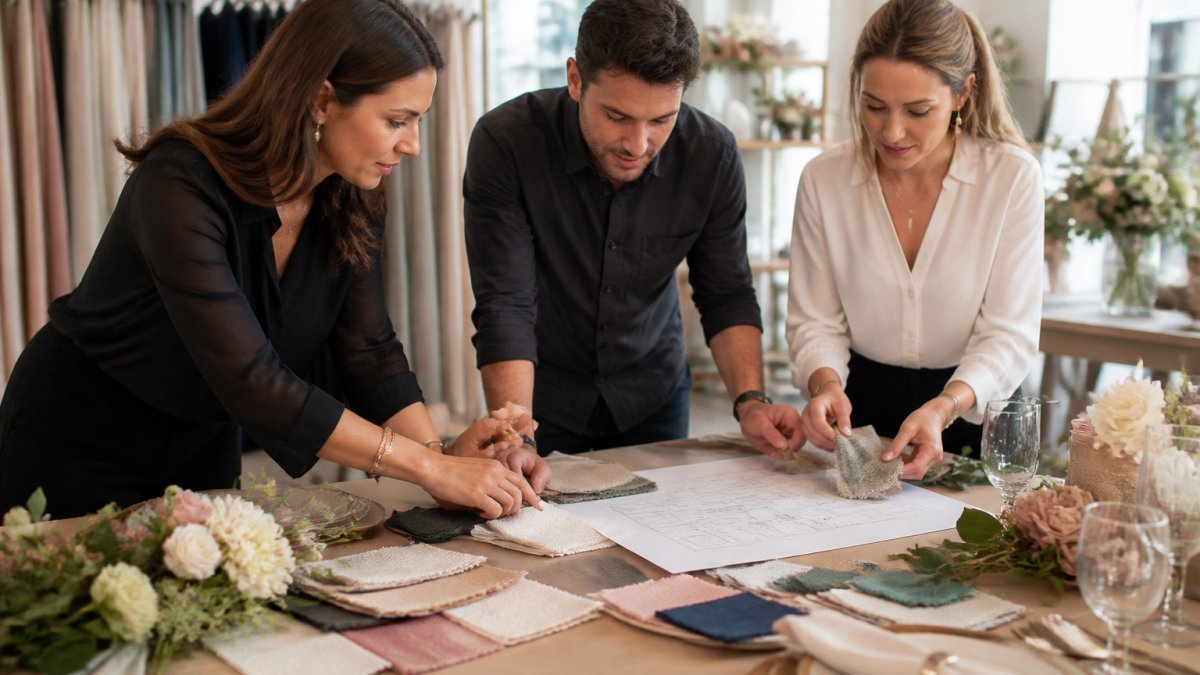
Write down three things before you contact anyone: the feeling you want guests to have, the elements that must appear, and the elements you refuse to accept.
Set your budget range at the same time, including a contingency.
Also decide up front which roles you need. With a venue coordinator and a caterer's event captain, you may only need a designer and a production lead.
Step 2: Shortlist Candidates and Review Portfolios
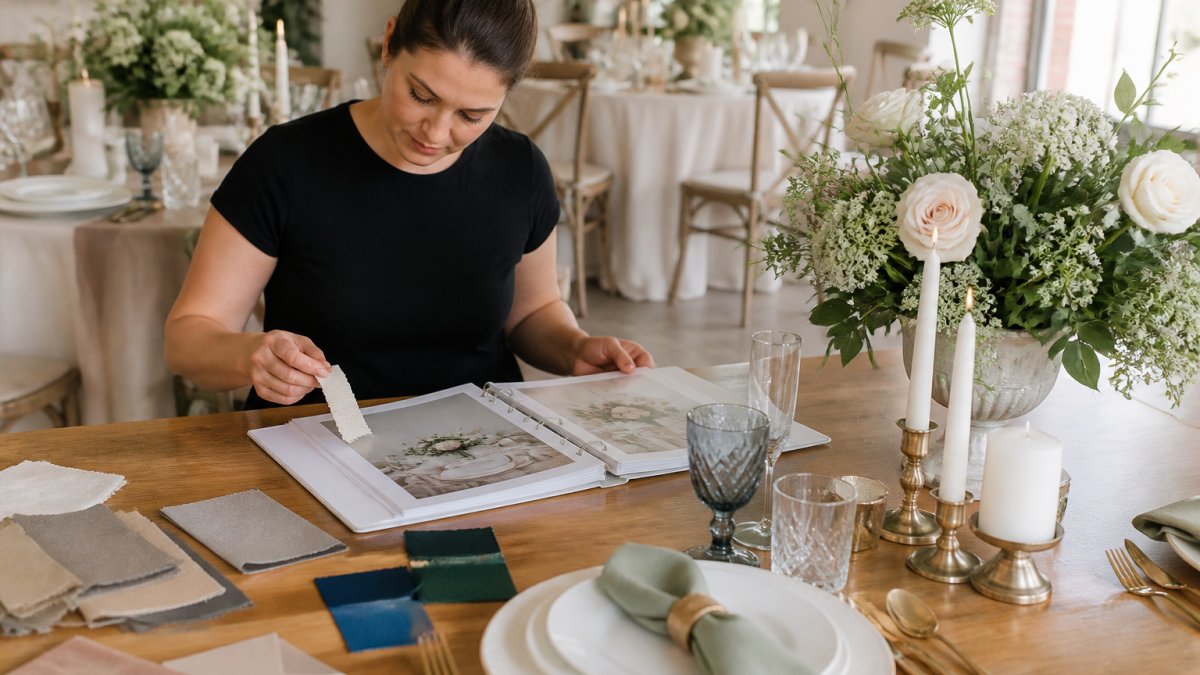
Look for portfolios that show range across your event type, not just one beautiful wedding. Ask whether the images are their own work or a venue's; a common mistake is falling for a photographer's portfolio with the planner credited in a caption.
Build a shortlist of three to five teams and score each on the same five criteria:
- Relevant event type and scale: Have they produced events within roughly 20% of your guest count and in a similar venue format?
- Execution evidence: Do they show floor plans, run-of-show documents, or load-in schedules, not just styled photos?
- Range: Can they show at least two distinct creative directions, or does every event look the same?
A simple 1-5 score per criterion, totaled, will surface the teams that look good on Instagram but cannot answer a logistics question.
Step 3: Interview and Check References
Ask each candidate to walk you through one event from concept to execution, including what went wrong. The answer tells you more than any portfolio. Then call two references from events similar in size and type to yours.
Use a short reference-call script so the answers are comparable:
- What was the scope the team was hired for, and did they deliver everything in the contract?
- How did they handle a change or a problem on the day?
- Was the final invoice in line with the original quote, and were there add-ons you did not expect?
- Would you hire them again for the same size event, and why or why not?
During the interview, ask three role-clarifying questions that separate a design team from a decor vendor: Who owns the floor plan and lighting design? Who is on site during load-in and during the event?
Step 4: Confirm Scope, Timeline, and Decision Rights Before You Sign
Before you move to contract, get four things in writing: the final scope list with inclusions and exclusions, the revision limit, the named on-site lead, and the final walkthrough date. Confirm who on your side has approval authority. Teams that resist putting these in writing are telling you something about how the project will go.
If a team pressures you to sign within 48 hours, treat that as a red flag.
What to Include in Your Event Design Brief Template
An event design brief tells a design team what the event must achieve, who is attending, and what constraints apply. A good brief saves weeks of back-and-forth. Here is the structure we recommend:
Event Design Brief Template
1. Event snapshot: Type (wedding, corporate, milestone), date, guest count, venue status. 2. The feeling: Three adjectives describing how guests should feel on arrival and at peak. 3. Non-negotiables: Must-have elements, hard exclusions, cultural or family requirements. 4. Audience: Guest demographics, accessibility needs, dietary considerations. 5. Budget: Total design budget and contingency, with any line items already committed. 6. Logistics constraints: Load-in window, venue rules, power availability, parking and traffic flow. 7. Deliverables expected: Concept deck, renderings, floor plans, setup schedule. 8. Decision process: Who approves, how many revision rounds, deadline for final sign-off.
Fill in every field. A brief with blanks signals indecision, and design teams will either guess or pad the scope to protect themselves.
Reading Event Design Portfolio Examples Like a Pro
Portfolio examples are evidence, not inspiration. Read them the way a hiring manager reads a resume: what is claimed versus what is shown.
Start with the floor plan if one is included.
Next, check consistency of lighting. Amateur design work looks fine in daylight and falls apart after sunset.
Finally, look for evidence of accessibility and inclusive design. Step-free routes, seating that accommodates mobility devices, and readable signage show a team that thinks about attendee experience, not just the camera angle.
Event Designer Cost: Budgets, Fees, and Contract Terms
Event designer cost depends on scope, guest count, venue complexity, and how much production is included, so no honest provider quotes a flat figure before understanding your event.
Most design teams price in one of three ways:
- Flat design fee: a fixed amount for concept development, renderings, and vendor management. Predictable, but scope must be defined tightly or the team will either pad the fee or bill change orders.
- Percentage of event budget: a fee calculated as a share of total spend. Simple to compare, but it can reward a larger budget and can create tension when you want to cut costs.
- Design fee plus production markup: creative work priced separately from physical build and rentals, with materials billed through at a markup. Transparent if the markup is disclosed; opaque if it is not.
Ask each candidate which structure they use and whether rentals, florals, labor, delivery, and strike (teardown) are included or billed separately. Horror stories usually trace to add-ons never in the original quote, not dishonesty.
How to Compare Proposals Line by Line
Put every proposal into the same categories before comparing totals:
- Creative development: concept, mood board, renderings, revisions.
- Design production: florals, rentals, fabrication, lighting design.
- Labor: install crew, strike crew, on-site design lead hours.
- Logistics: delivery, trucking, permits, venue load-in fees.
- Management: vendor coordination, timeline, day-of oversight.
- Taxes and gratuity: confirm what is included and what is added at invoice.
A lower total often hides a missing category. If one proposal is 20% cheaper, find out which of the six lines is absent before you celebrate.
Deposits, Payment Schedules, and Cancellation Terms
A common pattern is a deposit at signing (often 25-50% of the design fee), a progress payment at design approval, and the balance due before the event date. Ask specifically:
- Is the deposit refundable, and under what conditions?
- What is the postponement policy, and does it carry a fee?
- What happens to payments already made if you cancel within 30, 60, or 90 days of the event?
Get the cancellation and postponement schedule in writing as a table with dates and percentages. Verbal assurances are not a policy.
Contract Clauses to Negotiate Before Signing
Four clauses deserve scrutiny on every design contract:
- Revision limit: confirm how many rounds are included and what a round costs after that. Unlimited revisions are rarely real; they usually mean the scope was padded elsewhere.
- Scope creep protection: require written change orders with pricing before any additional work begins.
- Creative asset ownership: confirm who owns the renderings, floor plans, and mood boards after the event, and whether you can reuse them.
What Drives Cost Up or Down
Guest count and venue complexity are the two biggest levers. A raw space with no built-in lighting, power, or load-in access costs more than a hotel ballroom with existing infrastructure. Floral-heavy concepts cost more than candle-and-linen at the same guest count, and custom fabrication costs more than rental. If your budget is fixed, ask which two or three design choices would reduce cost most without changing the feel, a good team will answer directly.
Evaluating Creative Proposals and Finalizing the Booking
A creative proposal should answer one question: does this team understand your event?
When you compare proposals, score them on the same criteria so emotion does not decide for you. Weight concept fit highest, then scope clarity, then references, then price.
Before signing, confirm the day-of plan. Ask who is on site, what the backup plan is if a vendor does not arrive, and who owns setup delays. Get the run-of-show timeline in writing, and confirm the final walkthrough date.
That final conversation is where a design team proves whether it is a creative shop or a true event partner. If you are ready to see what a tailored concept looks like for your event, our team can walk you through the process and current pricing, which is available on our website.
Booking a design team is a decision you live with for months, then in a single evening that cannot be redone.
Frequently Asked Questions
What does a professional event design team do?
A professional event design team handles the creative and visual elements of your event: concept development, floor plans, decor, lighting, floral, staging, and production. They translate your vision into a cohesive look and coordinate the vendors who build it. Many teams also manage setup and day-of execution so the design matches the plan. Centerpiece Productions, for example, provides custom concepts and comprehensive support from first meeting through event day.
How much does professional event design cost?
Event designer cost depends on scope, guest count, venue, and how much custom fabrication is involved. Pricing is usually quoted as a design fee, a percentage of the overall budget, or a flat project rate. Because every event is different, the most reliable step is to request a custom quote. Centerpiece Productions publishes pricing on its website, so you can see real numbers before committing.
What should I include in an event design brief?
A strong event design brief template covers your event date, venue, guest count, total budget, and the mood you want guests to feel. Add a color palette, inspiration images, must-have elements, and any venue restrictions like load-in times or hanging limits. List your non-negotiables and your flexible items separately. The clearer the brief, the more accurate the proposal and the fewer surprises later.
Can an event design team work with my existing venue and vendors?
Yes. Most design teams are built to work alongside venue coordinators, caterers, florists, and photographers you have already booked. The key is to share your vendor list during the briefing stage so the team can plan around contracts, load-in windows, and venue rules. Ask upfront how they handle vendor coordination and who is responsible if a vendor arrives late or misses a deliverable.