 blog
Best Event Planners for Galas: 2026 Expert Guide
Last Updated: October 23, 2026
Quick Summary
The best event planners for galas build a fundraising machine, managing the run of show, vendor contracts, room design, and the revenue goal from first call to final thank-you letter. Choose planners with gala-specific experience in auctions and paddle raises, callable references, and a written scope and fee structure.
- Full-service gala planning covers strategic planning, design, logistics, vendor management, and post-event reporting.
- Start planning nine to twelve months out, beginning with revenue target, guest count, and budget ceiling.
- Set the revenue target first, then work backward to ticket price, tables, sponsorships, and auction yield.
- Include a contingency line of 10 to 15 percent of total costs in your gala budget template.
- Ask candidates what their last three galas raised against target before signing.
Table of Contents
- What the Best Event Planners for Galas Actually Do
- Gala Event Planning Checklist: From First Inquiry to Final Toast
- How to Plan a Fundraising Gala That Hits Its Revenue Target
- Building Your Gala Event Budget Template
- Gala Event Decor Ideas That Hold Up Under Real Conditions
- Questions to Ask Before Hiring Any Gala Planner
- Frequently Asked Questions
What the Best Event Planners for Galas Actually Do
The best event planners for galas do far more than book a venue and arrange flowers. They build a fundraising machine: they manage the run of show, negotiate vendor contracts, design the room, and keep the revenue goal in view from the first planning call to the final thank-you letter.
That distinction matters. A gala is a fundraiser first and a party second. Planners who treat it as pure celebration tend to produce beautiful rooms that miss their numbers.
At Centerpiece Productions, we approach gala work through that lens: custom concepts built around your cause, your donors, and your revenue target rather than a template pulled off a shelf.
Core Services and Production Scope
Full-service gala planning typically covers five workstreams: strategic planning, event design and creative direction, logistics and coordination, vendor management, and post-event reporting. The production team handles venue selection, catering, lighting, decor, entertainment, and the auction or paddle raise, usually under one point of contact.
Scope varies widely. Some planners consult only on design. Others run the entire production, including load-in and load-out. Ask any candidate to define exactly where their responsibility ends.
How to Choose the Right Event Planner for a Gala
Start with evidence, not chemistry. Ask for a portfolio of past galas, then ask what those events raised against their targets. A planner who can speak fluently about fundraising revenue, donor engagement, and sponsor value is a different hire than one who only talks about aesthetics.
We recommend a three-part screen:
- Gala-specific experience: Have they run auctions, paddle raises, and seated dinners for your attendance range?
- References you can call: Past clients, ideally from nonprofits with similar budgets.
- A written scope and fee structure: Flat fee, percentage of budget, or hourly. Get it in writing before you sign.
Gala Event Planning Checklist: From First Inquiry to Final Toast
A gala event planning checklist keeps a nine-month project from collapsing into a six-week scramble. The sequence below is the one we use, and the order matters more than the dates.
| Phase | Timing | Key Deliverables |
|---|---|---|
| Discovery and goal setting | 9-12 months out | Revenue target, guest count, budget ceiling, committee formed |
| Venue and vendor booking | 8-10 months out | Signed venue contract, caterer, entertainment holds |
| Design and creative direction | 6-8 months out | Concept boards, decor plan, lighting design, event branding |
| Auction and sponsorship build | 4-6 months out | Sponsor packages, auction item procurement, donor outreach |
| Logistics and run of show | 2-3 months out | Timeline, floor plan, vendor load-in schedule, staffing plan |
| Final confirmations | 2-4 weeks out | Vendor walkthrough, seating locked, scripts approved |
| Event day and follow-up | Day of plus 2 weeks | Seamless execution, thank-you communications, revenue report |
Two items on that list get skipped most often: the vendor walkthrough and the post-event report. Both are where problems surface.
How to Plan a Fundraising Gala That Hits Its Revenue Target
Learning how to plan a fundraising gala starts with math, not decor. Set the revenue target first, then work backward to ticket price, table count, sponsorship tiers, and expected auction yield. Every design and logistics decision should serve that number.
A common approach is to split the target into four streams: ticket sales, table sponsorships, live and silent auction, and direct donations. Assign a realistic figure to each, then track actuals weekly once outreach begins.
Donor engagement deserves its own owner on the committee. Someone must handle invite lists, follow-up calls, and pledge collection. That work does not happen by itself during production week.
Building Your Gala Event Budget Template
A gala event budget template should list every line item before you sign a single contract, with a contingency line of 10 to 15 percent of total costs. Galas run on fixed costs, so surprises come from scope creep, not from variable pricing.
Structure the template in four blocks, and build each line with a low, expected, and high figure so you can see where the risk sits:
- Venue and catering: room rental, food and beverage minimums, service charges, rentals, valet or parking
- Production: lighting, sound, staging, decor, floral, entertainment, labor and load-in
- Fundraising costs: auction software, mobile bidding, payment processing, printing, donor data management
- Operations: staffing, insurance, transportation, marketing, contingency
The cost drivers that move a gala budget most. Most practitioners find that four lines account for the majority of variance: food and beverage minimums, production labor, auction technology, and the planner fee itself. A venue with a high F&B minimum can erase the savings of a lower room rental. Production labor scales with load-in hours and union rules at the venue, so ask for the labor estimate in hours, not just dollars. Auction software and mobile bidding are usually priced per attendee or per event, so confirm the pricing model before you build the line.
Planner fee structures to expect. Planning fees commonly take one of three forms: a flat project fee, a percentage of the total event budget, or an hourly rate. Flat fees are easiest to compare across candidates; percentage fees align the planner's incentive with the budget but can reward a larger spend; hourly rates work for limited-scope consulting but are hard to cap. Ask each candidate to quote against your specific event rather than a general rate card, and ask what is excluded from the fee, travel, additional staffing, and post-event reporting are common exclusions.
A worked structure, not a rate card. Build your template so each block has an owner and a review date. For a seated dinner with a live auction, a common pattern is to allocate the largest share to venue and catering, a meaningful share to production, a smaller but non-negotiable share to fundraising technology and payment processing, and the remainder to operations and contingency. The exact split depends on your revenue target and guest count, but the discipline of assigning a percentage range to each block before you request quotes keeps the process honest.
Where to find real benchmarks. Ask each candidate for a sample budget from a past event with the client's permission, redacted as needed. Compare line-item ranges rather than totals. Most established planners will share a sample budget structure once you are in a serious conversation.
Track actuals against the template weekly. A budget reviewed once a month is a budget you will overshoot.
Gala Event Decor Ideas That Hold Up Under Real Conditions
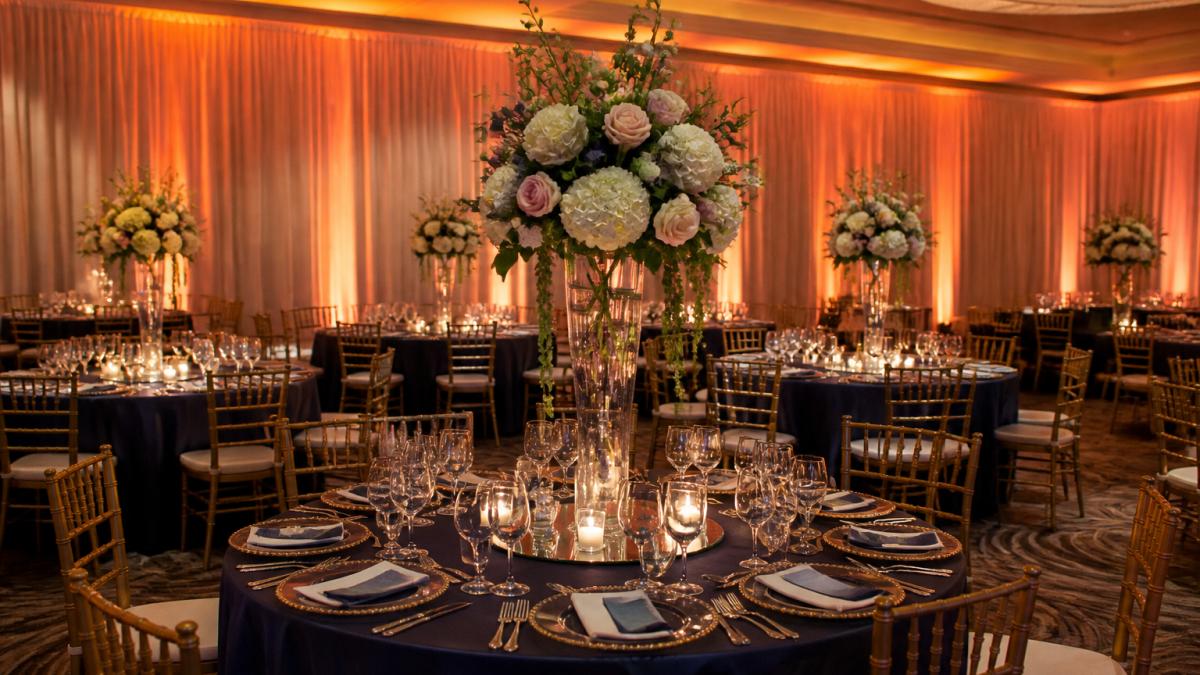
Gala event decor ideas succeed or fail on three practical tests: sightlines, lighting, and setup time. Tall centerpieces that block conversation, uplighting that washes out auction screens, and installations that need six hours of load-in all look worse in the room than they did on the concept board.
What works reliably:
- Low and wide centerpieces for seated dinners where conversation matters
- Layered lighting that separates the dining floor from the stage and auction display
- Modular backdrops that install in under two hours and photograph well from every angle
- A cohesive event branding system carried through signage, programs, and screen graphics
Creative direction should serve the guest experience, not the portfolio shot. We build concepts around how guests move through the room, where they will stand during the paddle raise, and what they will photograph.
Questions to Ask Before Hiring Any Gala Planner
Ask five questions before signing: What did your last three galas raise against target? Who is on your production team on event day? What is your backup plan if a vendor cancels? How do you handle accessibility and dietary needs? What does post-event reporting include?
The answers reveal more than any portfolio. A planner who can walk you through a vendor no-show they recovered from has real event logistics experience. One who cannot has not been tested yet.
Also confirm insurance and contracts. Ask who holds vendor deposits and what happens to them if the event is postponed. The IRS guidance on charitable fundraising events is worth reviewing with your finance team, since ticket and auction revenue carry reporting obligations that affect how you structure the evening.
Accessibility and sustainability belong in this conversation too. Ask how the planner handles step-free access, accessible restrooms, dietary accommodations, and waste reduction. These details are easier to design in than to retrofit.
Frequently Asked Questions
How much does it cost to hire a planner for a gala?
Gala planning fees vary widely based on scope, guest count, and production complexity. Full-service planning for a large fundraising gala costs more than coordination-only support, and decor, lighting, and entertainment are usually billed separately from the planning fee. Centerpiece Productions lists its pricing on its website, and a direct quote is the only way to get an accurate number for your event. Ask any planner for a line-item breakdown before signing.
How far in advance should I hire a gala planner?
For a full-scale fundraising gala, start the search 9 to 12 months before the event date. That window gives you time to lock in a venue, secure sponsors, and build a gala event planning checklist without rushing vendor decisions. Smaller galas or milestone celebrations can sometimes be planned in 4 to 6 months, but the best venues and entertainment book early. If your date is fixed by a board or committee, begin inquiries as soon as that date is set.
What should I look for in a gala planning company?
Look for documented gala experience, not just general event work. Ask for a portfolio of past galas with guest counts and photos, client references you can actually call, and a clear description of how the production team handles vendor no-shows or last-minute changes. Confirm whether the planner manages auction logistics and sponsor deliverables, since those drive fundraising revenue. A gala event budget template and a written timeline should be part of the proposal.
How do gala planners manage vendors and event budgets?
Strong planners centralize vendor management: one contract schedule, one payment calendar, and one point of contact for catering, lighting, entertainment, and decor. On budgets, they build a gala event budget template that separates fixed costs from variable ones, tracks deposits against final payments, and flags overruns before they compound. Ask prospective planners how often they send budget updates and who approves change orders, because that process decides whether your gala stays on budget.
Planning a gala that raises real money and still feels effortless to your guests takes a production team that understands both halves of the job. Centerpiece Productions builds custom concepts around your cause, manages vendor coordination and event logistics from inquiry to final toast, and designs rooms that hold up under real conditions. Get started with Centerpiece Productions and plan a gala your donors remember for the right reasons.